Understanding Coin Grading Basics
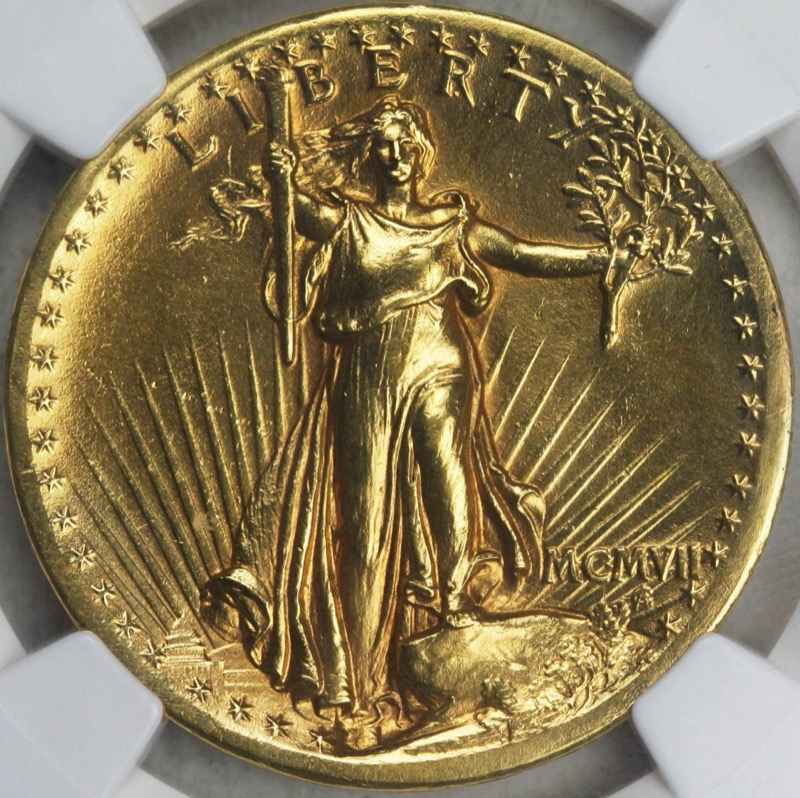
A 1907 High Relief Saint-Gaudens Double Eagle — the difference between grades on a coin like this can mean tens of thousands of dollars.
The Sheldon Scale
Coin grading in the United States follows the Sheldon numerical scale, which runs from 1 (barely identifiable) to 70 (a perfect, flawless coin). Dr. William Sheldon originally developed this system in 1949 for large cents, but it was later adopted across all U.S. coin series. The number is paired with an abbreviation that describes the general condition — for example, VF-30 means "Very Fine, grade 30." Understanding this system is essential because two coins of the same date and mintmark can differ in value by thousands of dollars depending on their grade.
Key Grade Levels to Know
While the full scale has 70 possible numbers, most coins you encounter will fall into a handful of important ranges. Good (G-4 to G-6) describes a heavily worn coin where the major design elements are visible but details are largely gone. Very Fine (VF-20 to VF-35) shows moderate wear on the high points with most details still sharp. Extremely Fine (EF-40 to EF-45) has only light wear on the highest points of the design. About Uncirculated (AU-50 to AU-58) shows just a trace of wear, often only visible under magnification. Mint State (MS-60 to MS-70) means the coin has never been in circulation, though lower Mint State grades can still show bag marks and contact marks from handling at the mint.
PCGS, NGC, and Third-Party Grading
Professional Coin Grading Service (PCGS) and Numismatic Guaranty Company (NGC) are the two most widely recognized third-party grading services in the hobby. When you submit a coin, their experts examine it, assign a grade, and seal it in a tamper-evident plastic holder called a "slab." This slab includes the coin's grade, a unique certification number, and sometimes additional designations like "Full Bands" for Mercury dimes or "CAM" for proof coins with cameo contrast. Having a coin graded by one of these services provides a standardized, trusted opinion that makes buying and selling much more straightforward.
Why Grading Matters for Value
The financial impact of grading cannot be overstated. Consider a common-date Morgan silver dollar: in Good condition it might sell for around thirty dollars, but in Mint State 65 the same coin could be worth several hundred. For scarcer dates, the spread is even more dramatic. A single point difference at the higher end of the scale — say, MS-64 versus MS-65 — can represent a significant jump in price because far fewer coins survive in top condition. This is why collectors pay close attention to grade and why third-party certification has become so important in the marketplace.
Training Your Eye
Learning to grade takes time and practice, but it is one of the most rewarding skills a collector can develop. Start by studying high-resolution photographs in grading guides published by PCGS and NGC, which show coins at each grade level. Compare those images to coins you own or encounter at shops and shows. Handle as many coins as you can and examine them under consistent lighting with a good loupe. Over time, you will develop an intuitive sense for the difference between, say, an AU-55 and an MS-62 — and that knowledge will save you money and help you build a stronger collection.