Key Date Coins Every Collector Should Know
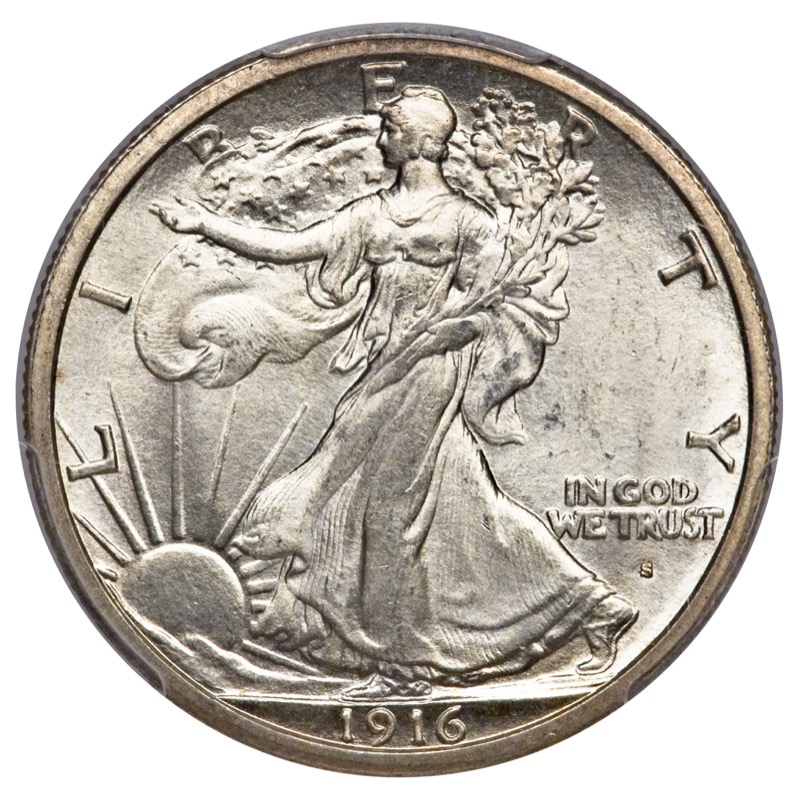
A 1916-S Walking Liberty Half Dollar — a first-year-of-issue key date prized by collectors.
What Makes a Key Date
In coin collecting, a "key date" refers to a particular year and mintmark combination that is significantly harder to find than others in the same series. The most common reason is low mintage — the U.S. Mint simply struck fewer coins that year at that facility. But mintage alone does not tell the whole story. Survival rate matters just as much: a coin with a moderate mintage can become a key date if most examples were melted, lost, or damaged over the decades. Historical significance and collector demand also play a role. Key dates are the coins that complete a set and command the highest premiums, making them the cornerstones of any serious collection.
Famous Key Dates in U.S. Coinage
Certain key dates have become legendary in the hobby. The 1909-S VDB Lincoln cent is perhaps the most famous — only 484,000 were struck, and they were pulled from production almost immediately after complaints about the prominent initials of designer Victor David Brenner on the reverse. The 1916-D Mercury dime, with a mintage of just 264,000, is the undisputed key to one of America's most beautiful coin series. Among silver dollars, the 1893-S Morgan dollar stands out with only 100,000 minted, making it the rarest regular-issue Morgan. In the Walking Liberty half dollar series, the 1921-S is the key, with low mintage and heavy attrition making high-grade examples exceptionally scarce.
Semi-Key Dates and Conditional Rarities
Not every valuable coin is a traditional key date. "Semi-key" dates have lower-than-average mintages and trade at a premium over common dates, but they are not as scarce or expensive as true keys. Examples include the 1914-D Lincoln cent and the 1932-D Washington quarter. Then there are "conditional rarities" — coins that are common in lower grades but nearly impossible to find in high-grade Mint State condition. A date that seems ordinary in circulated grades can be worth a fortune if it survived in gem condition. This is why understanding both mintage and survival rates is so important when evaluating a coin's true scarcity.
Checking Your Pocket Change
While finding a 1909-S VDB penny in your pocket change today is extraordinarily unlikely, it is not impossible to find coins worth more than face value in everyday circulation. Older Jefferson nickels, pre-1965 silver dimes and quarters, and even certain modern error coins do occasionally turn up. The practice of "coin roll hunting" — buying rolls of coins from the bank and searching through them — remains a popular and affordable way to look for interesting finds. Even if you do not uncover a rarity, the process teaches you to examine coins carefully, which is a skill that pays off when you are shopping at dealers or shows.
Why Key Dates Command Premiums
The economics of key dates are straightforward: more collectors want them than there are coins available. Completing a series is a powerful motivator, and the key date is always the last coin standing between a collector and a finished set. As a result, key dates tend to hold their value well even during periods when the broader coin market softens. They are also the coins most likely to appreciate over time, because the supply is permanently fixed while collector interest continues to grow. For anyone building a collection with an eye toward long-term value, understanding which dates are keys — and buying them wisely — is one of the most important skills to develop.