Common Coin Collecting Mistakes to Avoid
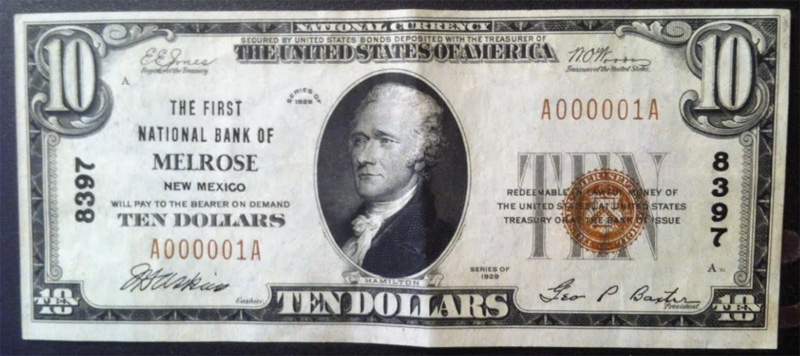
A 1929 $10 National Bank Note from Melrose, New Mexico — mishandling a collectible like this through cleaning or improper storage could significantly reduce its value.
Cleaning Your Coins
This is the single most destructive mistake a collector can make, and it happens constantly — especially to inherited collections. The natural instinct is to polish a tarnished coin so it looks shiny and new, but cleaning almost always reduces a coin's value, sometimes dramatically. Chemical dips strip away the original surface luster. Polishing with a cloth or abrasive creates hairline scratches visible under magnification. Even rinsing a coin in water can leave spots. Third-party grading services like PCGS and NGC will assign a "details" grade to cleaned coins, which significantly lowers their market value compared to a straight-graded example. The rule is simple: if you are not sure whether to clean a coin, do not clean it.
Buying Before Learning
Enthusiasm is a wonderful thing, but spending heavily before you understand what you are buying is a reliable way to overpay and end up with a collection of mediocre coins. New collectors are especially vulnerable to impulse purchases at coin shows or online auctions, where slick photography and persuasive descriptions can make an ordinary coin seem special. Take the time to study the series that interests you. Learn the key dates, the common grades, and the typical price ranges. Handle as many coins as you can so your eye develops. The knowledge you gain in your first few months of reading and observing will save you far more than it costs in patience.
Ignoring Condition
Many beginners focus only on date and mintmark while overlooking the importance of condition. Two coins with the same date can differ in value by a factor of ten or more depending on their grade. A 1921 Morgan dollar in Good condition is an inexpensive, common coin; the same date in MS-65 is genuinely scarce and commands a serious premium. When building a collection, it is almost always better to buy fewer coins in higher grades than to fill every hole with low-quality examples. A well-chosen coin in solid condition will hold its value and bring you more satisfaction than a drawer full of heavily worn pieces.
Not Verifying Authenticity
Counterfeit coins are a real and growing problem in the hobby, particularly for higher-value pieces. Fake Morgan dollars, gold coins, and key-date rarities circulate through online marketplaces, flea markets, and even some less reputable dealers. Learning the basic diagnostics — correct weight, proper dimensions, sound (the "ring test"), and surface characteristics — will help you spot the most obvious fakes. For expensive purchases, buying coins already graded and slabbed by PCGS or NGC is the safest approach, since these services guarantee authenticity. You can also verify a slab's legitimacy by checking the certification number on the grading service's website.
Overpaying and Poor Storage
Retail prices for coins vary widely depending on where you shop. Television coin shows, late-night infomercials, and mass-market "collectible" companies often charge enormous markups over actual market value. Before buying any coin, check recent sold prices on major auction platforms and consult a current price guide so you know what a fair price looks like. Finally, do not neglect storage. Keeping coins loose in a jar, storing them in PVC-containing flips, or leaving them in a humid environment will slowly damage the very pieces you are trying to preserve. A small investment in proper holders and a dry storage location protects everything you have worked to build.