How to Store and Protect Your Coins
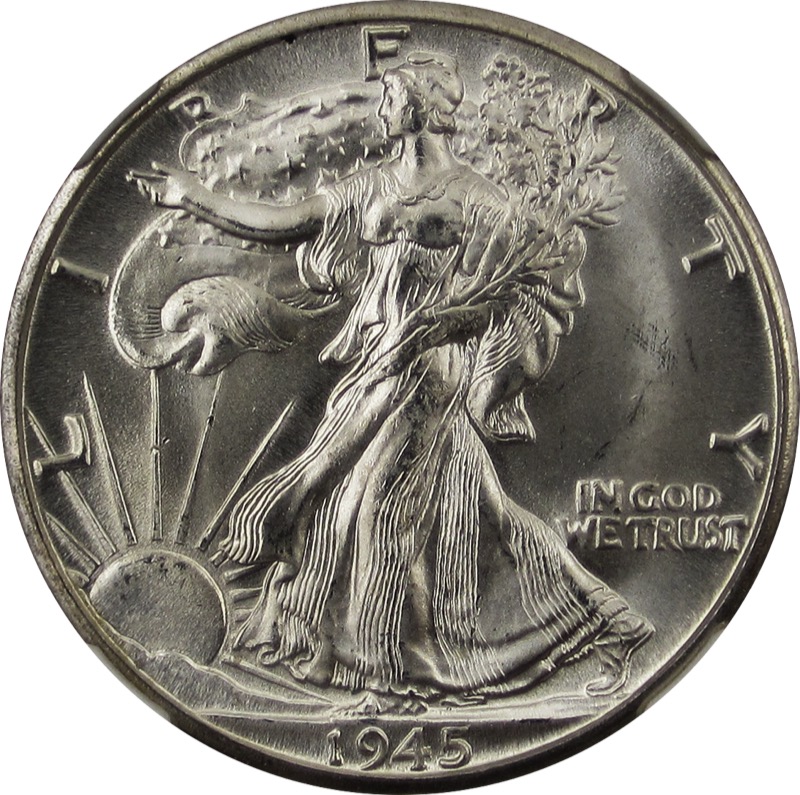
A 1945-D Walking Liberty Half Dollar in excellent condition — proper storage preserves this kind of surface quality for decades.
Coin Holders and Flips
The most basic and affordable way to store individual coins is in 2x2 cardboard flips with Mylar windows. These holders are stapled shut around the coin and can be labeled with the date, mintmark, and grade. For a step up in protection, hard plastic "snap-together" holders or airtight capsules provide a more rigid barrier against contact damage. If you are using soft plastic flips, make absolutely sure they are made from Mylar or another inert material — never PVC. Flips made from polyvinyl chloride will slowly leach chemicals onto the coin's surface, leaving a green, oily residue that permanently damages the finish and destroys value.
Albums, Folders, and Storage Boxes
Coin folders — the classic blue or red cardboard boards with cutouts for each date — are an inexpensive and satisfying way to organize a series like Lincoln cents or Roosevelt dimes. They let you see your progress at a glance but offer minimal protection, since one side of the coin is exposed. Coin albums with clear sliding pages protect both sides while still allowing viewing, making them a better choice for more valuable pieces. For bulk storage of coins in individual holders, cardboard storage boxes designed for 2x2 flips keep everything organized and accessible. Whatever system you choose, store your collection in a cool, dry location away from direct sunlight.
Handling Your Coins Properly
How you handle a coin matters more than most beginners realize. Always hold coins by their edges — never touch the flat surfaces (the obverse and reverse) with bare fingers. The oils and acids on your skin can leave fingerprints that, over time, etch into the metal and become permanent. For valuable coins, wear clean cotton gloves as an extra precaution. When examining a coin, hold it over a soft surface like a felt pad or folded towel, so if you accidentally drop it, the coin will not be damaged by hitting a hard tabletop. These habits are simple to develop and can prevent costly mistakes.
Environmental Dangers
Coins are surprisingly vulnerable to their surroundings. High humidity accelerates toning and corrosion, particularly on copper and silver. Storing coins in a basement, attic, or garage where temperature and humidity swing widely is a common mistake that slowly degrades a collection. Exposure to sulfur — found in certain papers, cardboard, rubber bands, and even the air in some environments — causes dark, unattractive toning on silver coins. Silica gel packets placed in your storage area can help absorb excess moisture, and keeping coins away from household chemicals, cigarette smoke, and cooking fumes will go a long way toward preserving their appearance.
The Golden Rule: Never Clean Your Coins
This point cannot be emphasized enough: do not clean your coins. Cleaning — whether with chemicals, abrasives, or even just a cloth — strips away the original surface and luster that collectors and grading services value. A coin with natural toning and original surfaces will always be worth more than a cleaned coin of the same grade. Cleaning leaves microscopic scratches (called "hairlines") that are immediately visible under magnification and will result in a significantly lower grade or a "details" grade from PCGS or NGC, which sharply reduces market value. If a coin is dirty, the safest option is to leave it alone or consult a professional before attempting anything.