A Guide to Collectible U.S. Paper Currency
Collecting U.S. paper currency is one of the most rewarding areas of numismatics. Unlike coins, which have been collected for centuries, paper money collecting gained serious momentum in the mid-20th century and has been growing steadily ever since. The variety of designs, sizes, and types issued by the United States government over the past 160 years offers something for every budget and interest level. Whether you are drawn to the artistry of 19th-century engravings or the history behind wartime issues, there is a rich world waiting to be explored.
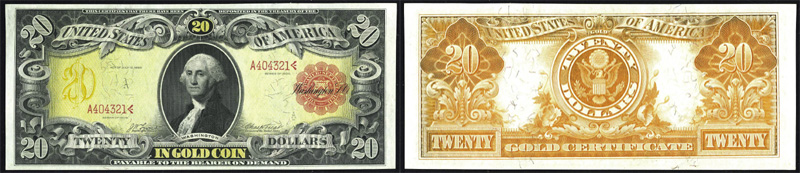
The 1905 $20 'Technicolor' Gold Certificate — among the most beautiful U.S. bills ever printed.
Large Size Notes vs. Small Size Notes
U.S. paper currency falls into two broad physical categories. Large size notes, issued from 1861 through 1928, measure roughly 7.4 by 3.1 inches and feature some of the most intricate and beautiful engraving ever produced by the Bureau of Engraving and Printing. These notes include Legal Tender Notes, Silver Certificates, Gold Certificates, National Bank Notes, and Federal Reserve Bank Notes. In 1929, the government switched to the smaller size we use today, measuring 6.14 by 2.61 inches. Small size notes are more affordable for beginners, while large size notes tend to command higher prices due to their age, lower survival rates, and striking visual appeal.
Fractional Currency and Other Unusual Types
During the Civil War, coins became scarce as people hoarded precious metals. The government responded by issuing fractional currency in denominations of 3, 5, 10, 15, 25, and 50 cents between 1862 and 1876. These tiny notes, some barely larger than a postage stamp, are affordable to collect and offer a fascinating window into a turbulent period. Other unusual types include Demand Notes (the very first federal paper money from 1861), Compound Interest Treasury Notes, and Interest Bearing Notes, all of which are rare and highly sought after by advanced collectors.
What Makes Paper Currency Valuable
Several factors determine the value of a collectible note. Rarity is paramount: how many were printed and how many survive today. Condition is equally important. Paper money is graded on a scale from 1 (Poor) to 70 (Perfect Uncirculated), with key grade thresholds at Very Fine (25-35), Extremely Fine (40-45), and Uncirculated (60-63+). Notes with original paper quality, sharp corners, and no folds command significant premiums. Beyond rarity and condition, specific serial numbers, printing errors, and historical significance all play a role. A common note in exceptional condition can be worth more than a scarcer note in poor shape.
Popular Series for New Collectors
If you are just starting out, consider building a type set of small size notes. This means acquiring one example of each major type: a Silver Certificate, a Gold Certificate, a Legal Tender Note, a Federal Reserve Note, and a National Bank Note. Many of these can be found in circulated condition for modest prices. Another popular approach is collecting by denomination, assembling every variety of $1 or $5 note ever issued. Star notes and notes with interesting serial numbers also make for an engaging and budget-friendly pursuit. Whatever direction you choose, buy the best condition you can afford, deal with reputable sellers, and take the time to learn grading standards before making significant purchases.