Red Flags to Watch When Selling Coins
Most coin dealers are honest professionals who've built their businesses on trust and repeat customers. But like any industry where valuable items change hands, there are bad actors. Knowing what to watch for protects you from making a costly mistake. If something feels off during a transaction, it probably is. Trust your instincts and don't let anyone pressure you into a sale you're not comfortable with.
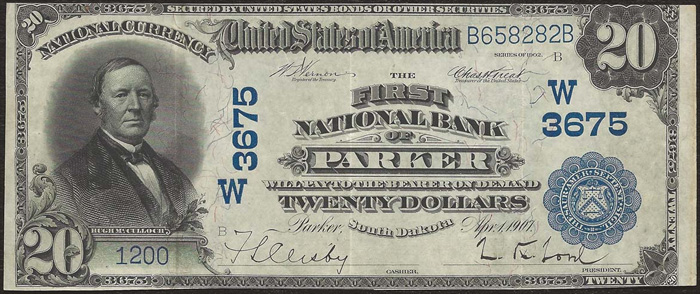
A 1902 $20 Blue Seal from Parker, South Dakota — a rare small-town note that dishonest buyers might undervalue.
High-Pressure Tactics
A legitimate dealer will never pressure you to sell on the spot. If someone tells you their offer is only good "right now" or "today only," that's a red flag. Real market values don't change overnight, and a fair offer today will be a fair offer next week. Pressure tactics exist because they work on people who haven't done their homework. Phrases like "I'm doing you a favor," "you won't find a better price," or "I have another buyer waiting" are designed to short-circuit your decision-making process. A reputable buyer will give you time to think, compare offers, and make an informed decision.
Offers Significantly Below Book Value
While you should expect a dealer's purchase offer to be below full retail value (they need to make a profit when they resell), offers that are dramatically below published values warrant scrutiny. If you've done your research and know a coin books at $500 in its approximate grade, and someone offers you $100, ask them to explain why. There may be a legitimate reason, such as the coin being cleaned, damaged, or a less desirable variety. But if the explanation doesn't add up, or if they can't explain at all, move on. Getting multiple offers helps you spot an outlier quickly.
No Credentials or Verifiable Reputation
Before selling to anyone, verify their credentials. Are they a member of the American Numismatic Association? Do they belong to a local coin club or dealer association? Do they have a physical business location, or are they operating out of a hotel room at a temporary "coin buying event"? Traveling coin buyers who set up shop for a weekend and then leave town are notoriously unreliable. They often pay bottom dollar because they know you'll never see them again. Established local dealers have a reputation to maintain and a community to answer to, which works in your favor.
Cash-Only Deals With No Documentation
Any legitimate transaction should come with a written receipt or invoice that itemizes what was sold and for how much. If a buyer insists on paying cash with no paper trail, think carefully about why. Beyond the obvious concerns about tax reporting, a lack of documentation means you have no recourse if something goes wrong. Reputable dealers routinely provide detailed receipts, and many prefer to pay by business check for larger transactions. If someone is trying to avoid creating a record of the transaction, that should concern you.
Requests to Take Coins Off-Premises
Be extremely cautious if a buyer asks to take your coins home, back to their shop, or anywhere out of your sight to "evaluate" them. Legitimate appraisals and evaluations are done in your presence. A skilled dealer can assess a collection on the spot; they don't need to take coins away for days to figure out what they're worth. Once coins leave your possession without a completed transaction, you've lost control. Coins could be switched, damaged, or "lost." If someone insists they need more time with your coins, offer to bring them back for a second appointment instead.
Unsolicited Offers and Door-to-Door Buyers
If someone contacts you out of the blue to buy coins, whether by phone, email, mail, or showing up at your door, proceed with extreme caution. Unsolicited buyers often target recent estate listings, obituaries, or social media posts to find people who may have inherited coins and don't know their value. No legitimate dealer needs to cold-call or knock on doors to find inventory. If you want to sell coins, you should be the one initiating the process by visiting established dealers, not the other way around.