What to Do When You Inherit a Coin Collection
Inheriting a coin collection can be overwhelming, especially if you don't know much about coins yourself. You might be looking at albums, rolls, loose coins in boxes, or even slabbed (professionally graded) coins in plastic holders. The good news is that taking the right steps early will protect the collection's value and give you the best possible outcome, whether you decide to keep it, sell it, or pass it along to someone else.
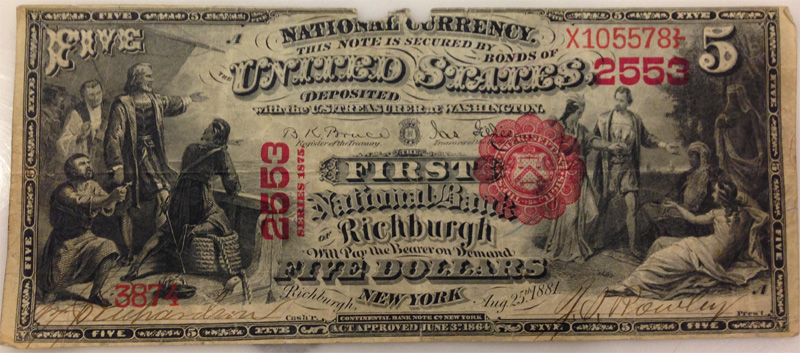
An 1875 National Bank Note from Richburg, New York — a piece of American banking history that might turn up in an inherited collection.
Don't Rush and Don't Clean Anything
The two most important rules when you first receive an inherited collection are: don't be in a hurry, and don't clean the coins. This cannot be stressed enough. Cleaning coins, even with gentle soap and water, almost always reduces their value. The natural patina (called "toning") that develops on coins over time is actually desirable to collectors and can add significant premium. Coins that have been cleaned are immediately identifiable to experienced dealers and are worth substantially less than coins in their original state. Leave everything exactly as you found it.
Document Everything
Before you move coins around or reorganize anything, take photographs of the collection as you received it. If the original collector kept an inventory list, spreadsheet, or notes, hold onto those carefully. They may contain purchase prices, dates of acquisition, and dealer information that will be helpful later. Some collectors also keep receipts or certificates of authenticity with their coins. This documentation can help an appraiser understand the scope and intent of the collection, and it may be important for estate tax purposes if the collection has significant value.
Get a Professional Appraisal
Once you've documented the collection, seek out a professional appraisal from someone who has no interest in buying the coins. This is a critical distinction. A dealer who appraises your collection and then offers to buy it has a conflict of interest. Look for appraisers who are members of professional organizations like the American Numismatic Association (ANA) or who hold credentials from recognized appraisal bodies. A qualified appraiser will charge a fee for their time, but you'll receive an unbiased assessment of what the collection is worth. For large or high-value collections, this step can easily save you thousands of dollars.
Understand Tax Implications
Inherited coins receive what's called a "stepped-up basis" for tax purposes, meaning their cost basis is generally the fair market value at the time of the original owner's death, not what the deceased originally paid. This is significant because if you sell the coins for close to their appraised value at the time of inheritance, you may owe little or no capital gains tax. However, if the collection appreciates significantly between the date of death and when you sell, you could owe capital gains on that increase. For valuable collections, it's worth consulting with a tax professional who understands collectibles, as coins are taxed as collectibles at a higher rate than standard long-term capital gains.
Finding the Right Buyer
When you're ready to sell, take the time to find a reputable dealer who will treat you fairly. Ask for referrals from the ANA, check online reviews, and visit more than one dealer to compare offers. A trustworthy dealer will explain exactly what they're looking at, why they're offering what they're offering, and won't pressure you to make an immediate decision. Bring your documentation and appraisal with you. If anyone tells you the appraisal is wrong and pressures you to sell below that value, walk away and get another opinion.