Buffalo Nickels and Their Value
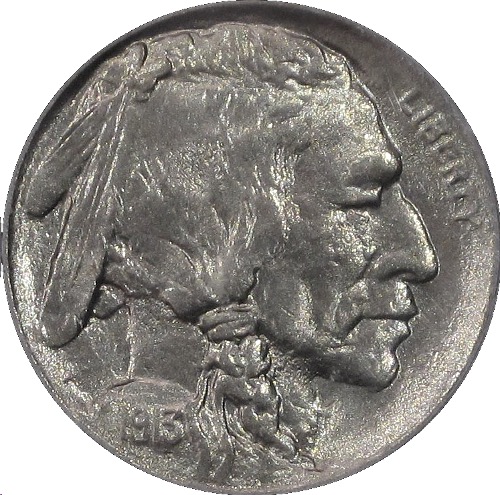
A 1913 Type 1 Buffalo Nickel — James Earle Fraser's iconic design featuring a Native American portrait.
A Distinctly American Design
The Buffalo nickel, also known as the Indian Head nickel, was minted from 1913 to 1938 and is widely regarded as one of the most beautiful coins ever produced by the United States Mint. Designed by sculptor James Earle Fraser, the obverse features a composite portrait of a Native American chief, reportedly modeled after several real individuals including Iron Tail, Two Moons, and John Big Tree. The reverse depicts an American bison standing on a mound. In the first year of issue, two design types were produced: the Type 1 with the bison on a raised mound, and the Type 2 with the bison on a flat plain and the denomination recessed to reduce wear.
Key Dates and Rarities
Several dates in the Buffalo nickel series stand out for their rarity and value. The 1913-S Type 2 is the first major key date, with a relatively low mintage and survival rate. The most famous rarity is the 1918/7-D overdate, where a 1918 die was punched over a 1917 die, creating a visible overlapping date. This coin is scarce in any grade and extremely valuable in higher conditions. The 1926-S is another tough coin, with a low mintage of just 970,000 and very few surviving in uncirculated condition. Other dates worth watching for include the 1913-S Type 1, 1914-D, 1915-S, 1921-S, and 1924-S. Even common-date Buffalo nickels in sharp, uncirculated condition carry a healthy premium.
Grading Challenges
Buffalo nickels present unique grading challenges compared to other series. The high points of the design, particularly the bison's horn and shoulder on the reverse and the Native American's cheekbone and braid on the obverse, are the first areas to show wear. Because of the coin's design, even light circulation can quickly reduce the sharpness of these features. Full horn visibility on the reverse is a key indicator of grade, and coins with a full, sharp horn bring significant premiums. Strike quality also varies considerably by mint and year. Many Denver and San Francisco issues came weakly struck from the factory, making it difficult to distinguish between a weakly struck uncirculated coin and a lightly circulated one. Learning to tell the difference is essential for this series.
Dateless Buffalo Nickels
One of the biggest issues with Buffalo nickels is date wear. On the Type 2 reverse (1913 onward), the date sits on a flat area of the obverse that was prone to rapid wear. Millions of Buffalo nickels in circulation lost their dates entirely, creating the well-known "dateless buffalo." While these coins have minimal numismatic value, typically worth only a modest amount above face value, there is a way to recover the date. A product called Nic-A-Date, an acid-based solution, can temporarily reveal the date on many worn specimens. However, this process damages the coin's surface and a restored date does not increase the coin's collectible value in any meaningful way. Dateless Buffalos are still fun to find and make an affordable way to hold a piece of American history.
Building a Buffalo Nickel Collection
Collecting Buffalo nickels by date and mint mark is a rewarding pursuit that offers a good balance of challenging key dates and affordable common issues. A complete set from 1913 to 1938 includes 64 regular-issue coins across the Philadelphia, Denver, and San Francisco mints. Many collectors choose to build a set in Fine to Very Fine grades, which allows the key dates to remain within reach while still showing attractive detail. For those on a tighter budget, assembling a date set without mint marks is a great starting point. Whatever approach you take, the Buffalo nickel's bold, distinctly American design makes it one of the most satisfying series to collect.